 HaoChi 好吃
Tofu Types and How to Handle Each
2026-09-02
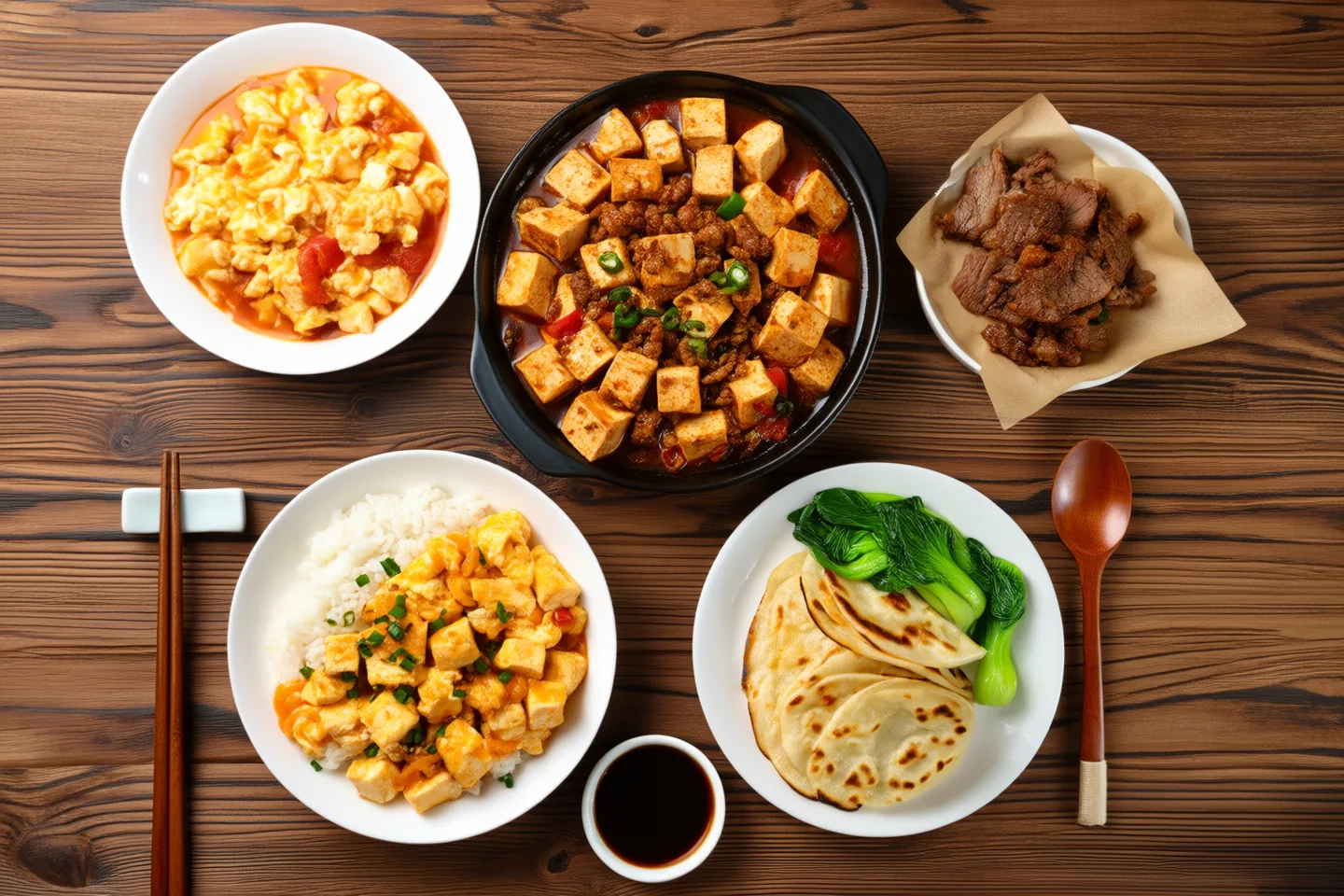
Tofu (豆腐, dòu fu) is one of China‘s most versatile ingredients, but the word covers a wide range of textures. Using the wrong type in a recipe guarantees disappointment — silken tofu falls apart in stir-fries, while extra firm tofu dominates delicate soups.
The Texture Spectrum
Chinese tofu is graded by water content, not just firmness. Silken (嫩豆腐, nèn dòu fu) is custard-like and breaks easily — perfect for soups and steamed dishes. Soft (软豆腐, ruǎn dòu fu) holds shape better but still crumbles. Firm (老豆腐, lǎo dòu fu) is dense and sturdy. Extra firm (黄干/北豆腐, huáng gān) is nearly solid.
Which Type for Which Dish
Silken: cold appetizers, steamed with toppings, blended soups, tofu pudding. Soft: gentle braises, hot pot, congee. Firm: stir-fries, mapo tofu (cut large), pan-frying. Extra firm: deep-frying, skewers, hearty stews.
Prep Tips
For firm and extra firm tofu, press between paper towels for 10 minutes to remove excess water — this improves browning and texture. For silken tofu, handle with two spatulas or invert the container directly into the dish.
Tofu Types at a Glance
The five types below cover nearly everything stocked in a Chinese supermarket. Water content drops as you move down the list — and each step down makes the tofu sturdier, chewier, and better at holding bold flavors.
| Type | Texture | Water content | Best dishes |
|---|---|---|---|
| Firm (老豆腐, lǎo dòu fu) | Dense and springy; cubes stay intact when tossed in a wok | Medium | Stir-fries, mapo tofu, pan-frying, braising |
| Soft (嫩豆腐, nèn dòu fu) | Tender and smooth; keeps its cube only with gentle handling | High | Soups, gentle braises, steamed dishes, congee |
| Silken (内酯豆腐, nèi zhǐ dòu fu) | Custard-like with no visible curds; slides rather than slices | Very high | Chilled tofu with toppings, silky thick soups (羹), tofu pudding, steaming |
| Pressed tofu (豆腐干, dòu fu gān) | Firm tofu pressed again until dense and chewy, almost meaty; often sold seasoned or smoked | Very low | Sliced into cold appetizers, celery and pressed tofu stir-fry, braised lu wei |
| Tofu puffs (油豆腐, yóu dòu fu) | Deep-fried cubes with a golden skin and a hollow, spongy interior | Very low | Hot pot, soups, red-braised dishes, stuffed tofu puffs |
Still hesitating between the two most common blocks? Our firm-vs-soft tofu comparison tests both side by side in stir-fries, soups, and braises, so you can see exactly when the difference matters and when it does not.
Frequently Asked Questions
Which tofu is best for stir-frying?
Firm or extra firm tofu. Press the block between paper towels for about 10 minutes, cut it into cubes, and add it to a hot wok so the surface seals before you start tossing. Soft and silken tofu will crumble into the sauce no matter how gently you stir. Firm tofu is also the classic choice for mapo tofu — cut the cubes large, around 2 cm, so they survive the braise intact.
What type of tofu is best for soup?
Silken or soft tofu. Add the cubes in the last few minutes of cooking and keep the soup at a gentle simmer — a rolling boil will break them apart. For heartier soups and hot pot, tofu puffs and frozen tofu work better because their spongy texture soaks up broth without falling apart.
Is pressed tofu the same as firm tofu?
No. Firm tofu is a fresh block with medium water content, ready to cook as-is. Pressed tofu (豆腐干, dou fu gan) is firm tofu that has been pressed again to expel most of the remaining water, leaving a dense, chewy slab that is often seasoned, smoked, or braised in soy sauce. Pressed tofu can be sliced paper-thin, which firm tofu cannot handle, so the two are not interchangeable in recipes.
What are tofu puffs?
Tofu puffs (油豆腐, you dou fu) are tofu cubes deep-fried until they turn golden and puff up, leaving a thin skin and a hollow, spongy inside. That structure makes them ideal for soaking up broth in hot pot, soups, and braises, or for stuffing with seasoned meat. Look for them in bags in the refrigerated or freezer section of Asian supermarkets.