 HaoChi 好吃
How Long to Soak Wood Ear Mushrooms: 1–2 Hours Cold, 30 Min Warm
2026-08-30
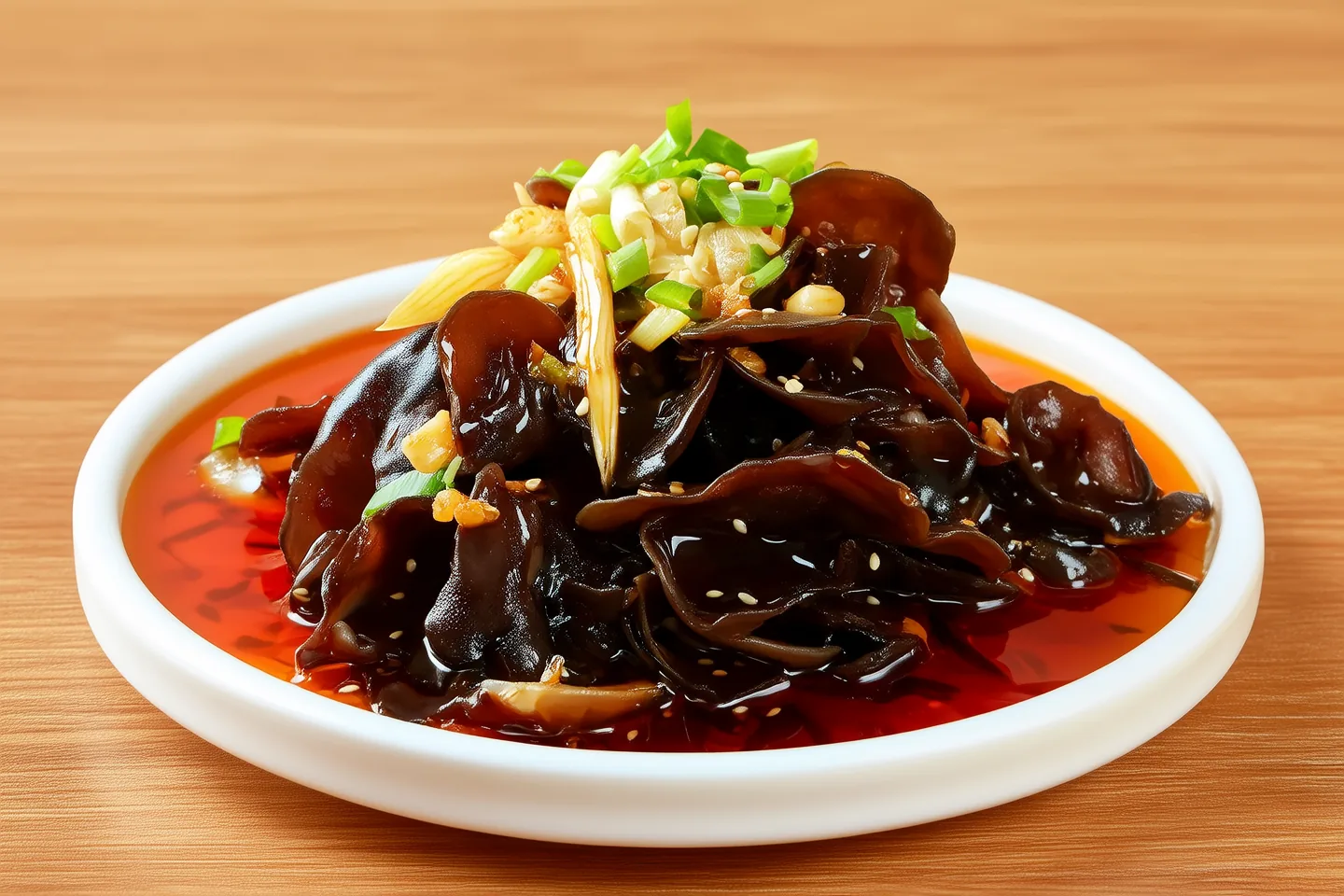
Wood ear fungus — 木耳, sometimes sold as black fungus or cloud ear — is dried, shelf-stable, and costs almost nothing. It has nearly no flavor of its own. What it brings is a snappy, slightly rubbery crunch that survives stir-frying and vinegar, which is why it shows up in cold dishes, hot and sour soup, and moo shu pork.
Soaking: the rule that actually matters
Soak dried wood ear in cold water for 1 to 2 hours, or in warm water for about 30 minutes. It expands to several times its dried size, so use far more water and a much bigger bowl than feels necessary.
Cleaning and trimming
- Rinse the rehydrated pieces under running water, rubbing gently to loosen grit trapped in the folds
- Trim off the hard, knobbly bit where it attached to the wood — it stays tough no matter how long you cook it
- Tear larger pieces into bite-sized ones rather than cutting, so the edges stay irregular and catch sauce
Cooking it
Wood ear needs brief cooking, not long simmering. Add it to stir-fries near the end, or blanch it for a minute before tossing into cold dressed dishes. Cooked too long it loses the crunch that makes it worth using at all.
Where it earns its place
- Cold dressed wood ear with vinegar, chili oil, and garlic — the classic
- Hot and sour soup, where it's the texture against the soft tofu
- Moo shu pork, where it echoes the crunch of the other vegetables
Buying and storage
Dried wood ear keeps for a year or more in a sealed container in a dark cupboard. Buy it whole rather than pre-shredded if you can — the pieces are cleaner and keep their texture better. Rehydrated wood ear should be used within a day or two and kept in the fridge.
Put it to work
Once soaked, rinsed, and trimmed, wood ear is ready for the pan. Cold dressed wood ear is the fastest route — blanch it for a minute, then toss with vinegar, garlic, and chili oil while it's still snappy. Moo shu pork stir-fries it with egg and pork, where its crunch echoes the other vegetables. Wood ear mushroom with shredded pork is the everyday home-style option — a quick stir-fry where the texture does all the work.
Frequently Asked Questions
Can I soak wood ear overnight?
Better not at room temperature. Long soaks in warm conditions allow bacteria to grow. If you need to prep ahead, soak it in the fridge and use it within a day.
How do I know if soaked wood ear has gone bad?
Smell it and feel it. It should smell neutral or faintly earthy. If it smells sour or the surface feels slimy, discard it — don't try to cook it clean.
Is wood ear the same as cloud ear?
Nearly — cloud ear is a thinner, more delicate variety. You can use them interchangeably in most recipes; cloud ear is a bit more tender.
How long does it take to soak dried wood ear mushrooms?
Soak them in cold water for 1 to 2 hours, or in warm water for about 30 minutes. Use a large bowl and plenty of water, because the pieces expand to several times their dried size. Avoid soaking at room temperature for many hours.
What should I do with soaked wood ear I don't use?
Drain it, put it in a covered container in the fridge, and use it within a day or two. Don't leave soaked wood ear sitting out at room temperature — that's when bacteria become a problem.
How do you clean and trim wood ear mushrooms?
Rinse the soaked pieces under running water, rubbing gently to loosen grit trapped in the folds, then cut off the hard, knobbly root where it attached to the wood. Tear larger pieces into bite-sized ones by hand so the irregular edges catch more sauce.